
UX Teardown: Improving the Ski Experience in the Gopass Ski Application
A short usability analysis based on a
user walkthrough at Jasná.
This short teardown focuses on three usability issues observed during a recorded walkthrough of the GoPass mobile app experience.
This teardown applies a structured, product-focused lens to highlight key usability and engagement opportunities, reflecting senior UX thinking based on observed user flows. Furthermore, this is an independent, experience-driven case study based on real usage of the product. While I did not have access to internal metrics or user research, the decisions reflect how I would approach prioritisation, trade-offs, and product direction in a production environment.
What is GoPass?
GoPass is a popular application used by skiers across multiple resorts in Slovakia operated by the Tatry Mountain Resorts group. It’s primarily used for purchasing ski passes, navigation to/from the resort or to gain general information like checking the weather/current conditions via their built-in webcams.
What is the intent of most users?
Skiers interact with the app in time-sensitive, high-context situations, often while moving, in cold conditions, and needing quick access to relevant information such as lift status, navigation, and pass validity.
Most skiers want to:
- Find the correct resort
- Check the conditions and lifts
- View the map and trails
- Access previous purchases or passes
Hotels and accommodations, whilst important, are probably not initially the top-most priority.
A 10-minute usability walkthrough was recorded while performing typical skier tasks in the app.
App walkthrough: The most crucial findings
The app attempts to support both trip planning and real-time usage within the same structure, leading to friction when users need fast, situational decisions on the mountain. This results in slower decision-making, increased cognitive load, and reduced usability in moments where speed and clarity are critical.
Key Assumptions that users will strongly consider whilst using the application
Users prioritise speed and clarity over feature depth during active skiing
Real-time information (lifts, conditions, navigation) is more valuable than pre-planning features in the moment
Reducing interaction steps improves usability in physically constrained environments
All skiing groups need to be considered (ski tourers, alpine skiers and nordic skiers)
Key Product Decision
Shifted the experience from a feature-driven structure to a context-driven model focused on “what the user needs right now” during active skiing.
Trade-offs considered
The redesigned experiences focus on enabling faster, context-aware decision-making rather than expanding feature access. In a production environment, I would validate these improvements through usage analytics, task completion rates, and targeted user interviews.
Finding 1: Difficulty Finding the Correct Resort
Problem
The process of locating the correct resort requires multiple navigation steps.
User Impact
Users may struggle to quickly access relevant information about the resort they are visiting.
Potential Business Impact
This friction may discourage users from relying on the app for real-time planning, reducing engagement with digital services such as pass purchases or parking.
Opportunity
Introduce a clearer resort selection experience with faster access to resort-specific information.
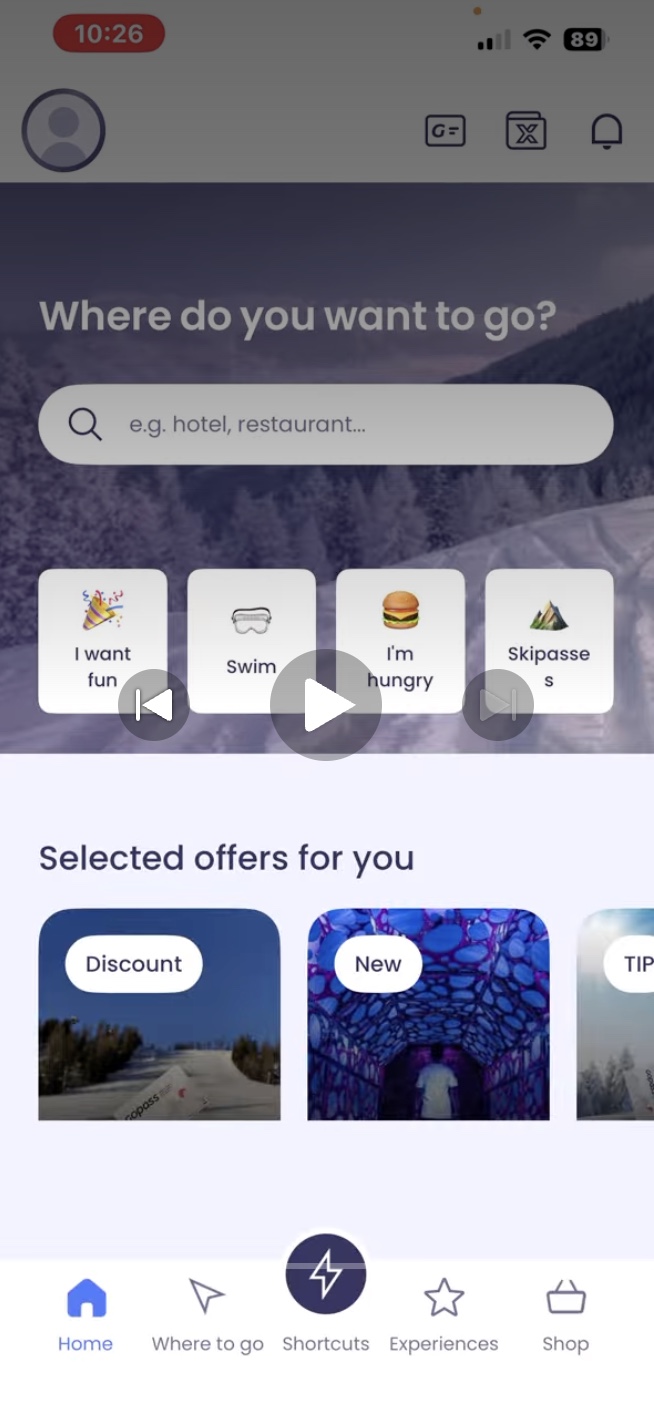
BEFORE
Finding the destinations previously was extremely confusing. It was hidden under the bottom menu item 'Where to go' in a small typeface.
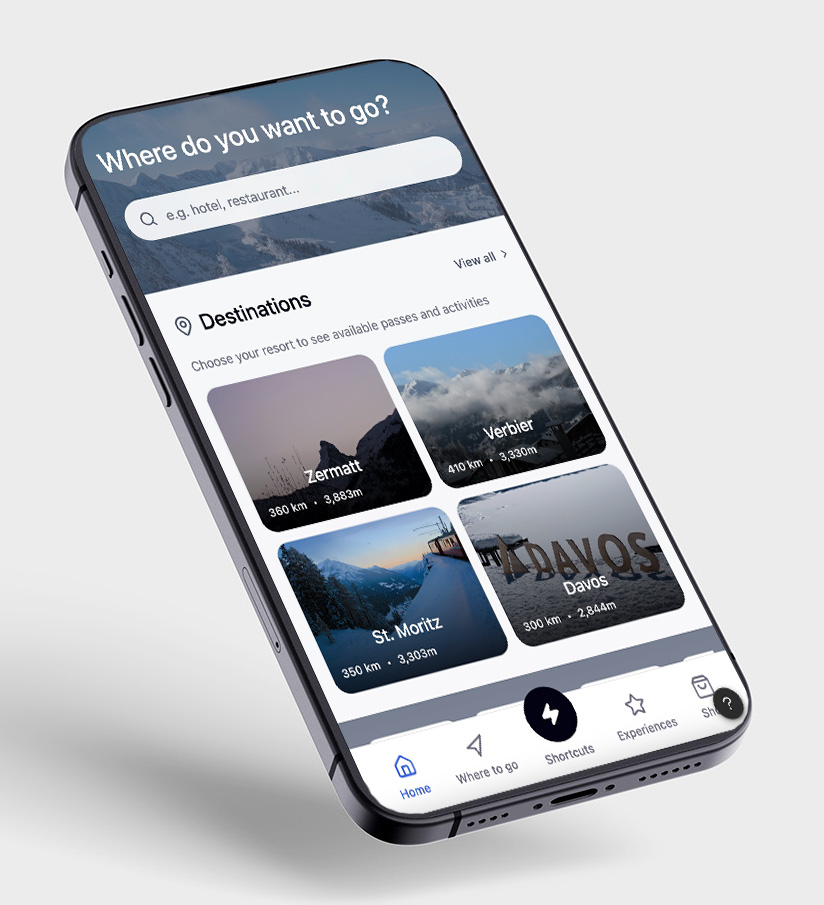
AFTER
The new approach removes the ambiguity and makes the destination 'front and centre' since most users will want to choose this first before considering other options.
Finding 2: Trail Map Clarity
Problem
Ski touring trails and alpine ski runs are not clearly distinguished on the map.
User Impact
Users may struggle to understand available routes or plan their day effectively.
Potential Business Impact
- Reduced reliance on the app for navigation
- Users switching to third-party sources or static maps
Opportunity
Improve the map legend and trail visualisation to differentiate trail types better.
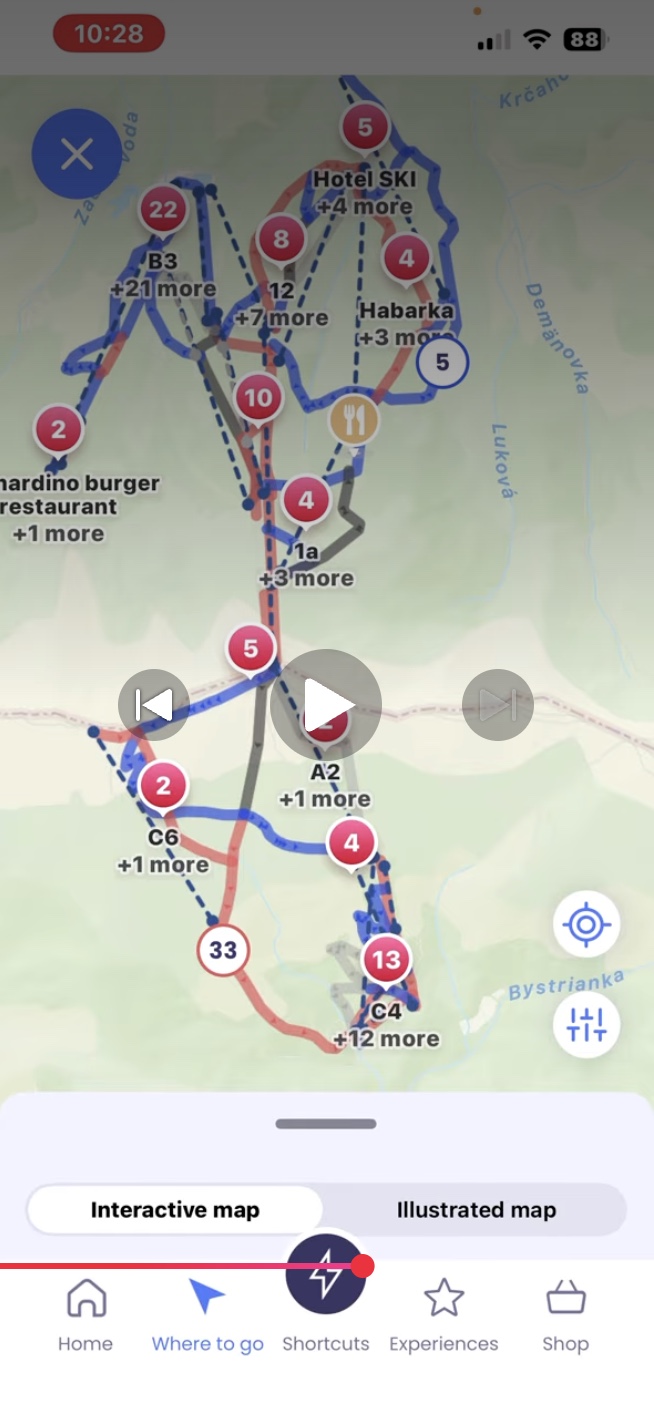
BEFORE
Choosing a different ski route, whether you are a ski tourer or a regular alpine skier, wasn't possible. This is quite frustrating for ski tourers who want to have an overview of where they can tour on any given day.
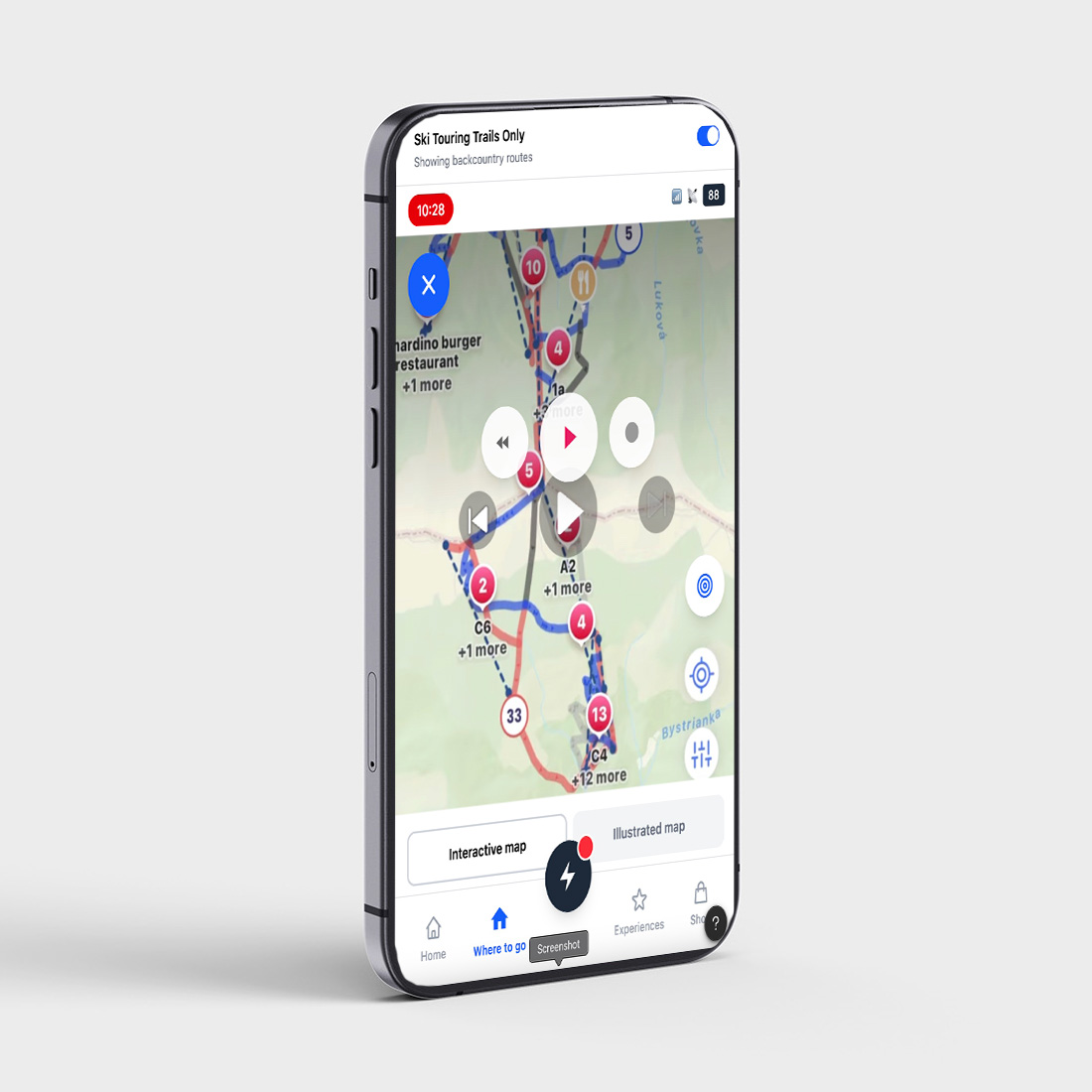
AFTER
The new design takes all skier types into consideration by adding a simple toggle switch at the top of the map to show ski touring trails and alpine ski trails. The Nordic trails are fairly well indicated on the map.
Lack of Transparency Around Previous Purchases
Problem
Users cannot easily review past purchases or verify which passes they currently hold.
User Impact
This creates uncertainty and reduces confidence when purchasing additional passes.
Potential Business Impact
- Increased support requests
- Reduced repeat purchases through the app
- Lower trust in digital transactions
Opportunity
Introduce a clearer “My Passes & Purchases” dashboard showing active passes and purchase history.
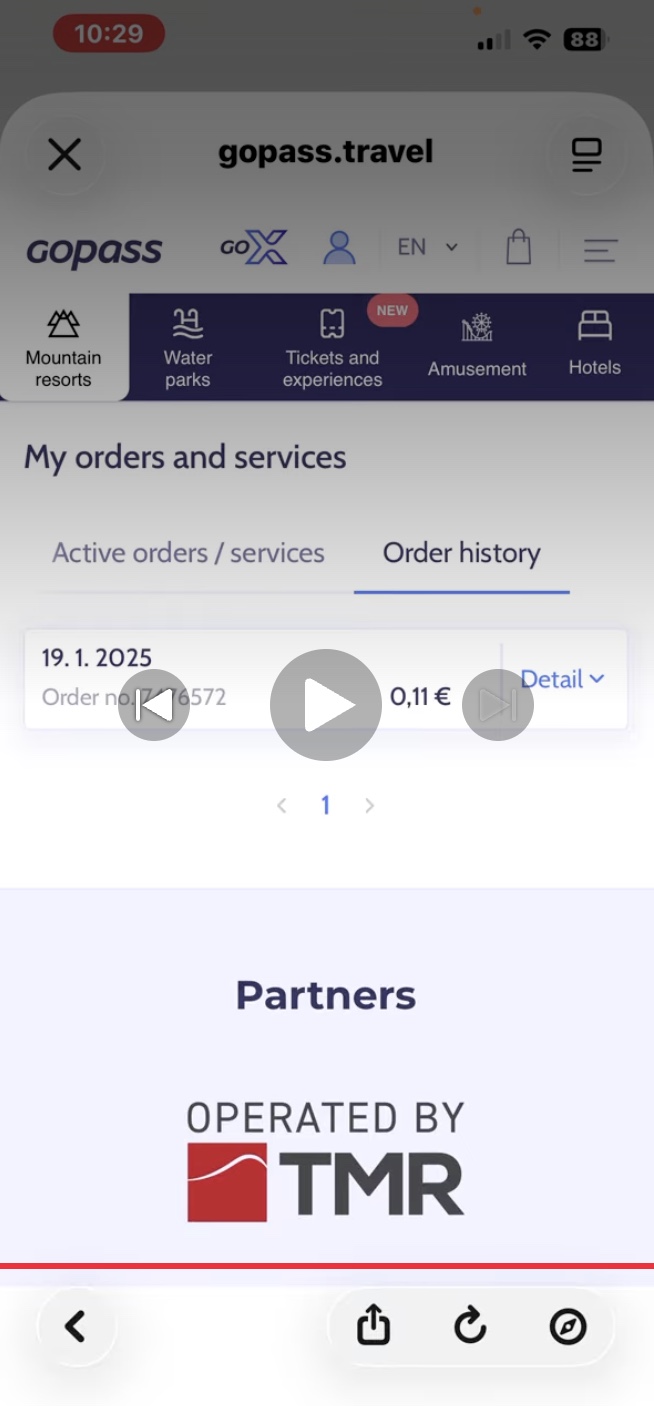
BEFORE
Previously, even if an order had been conducted, it didn't appear in the order history, and any active orders were not displayed.
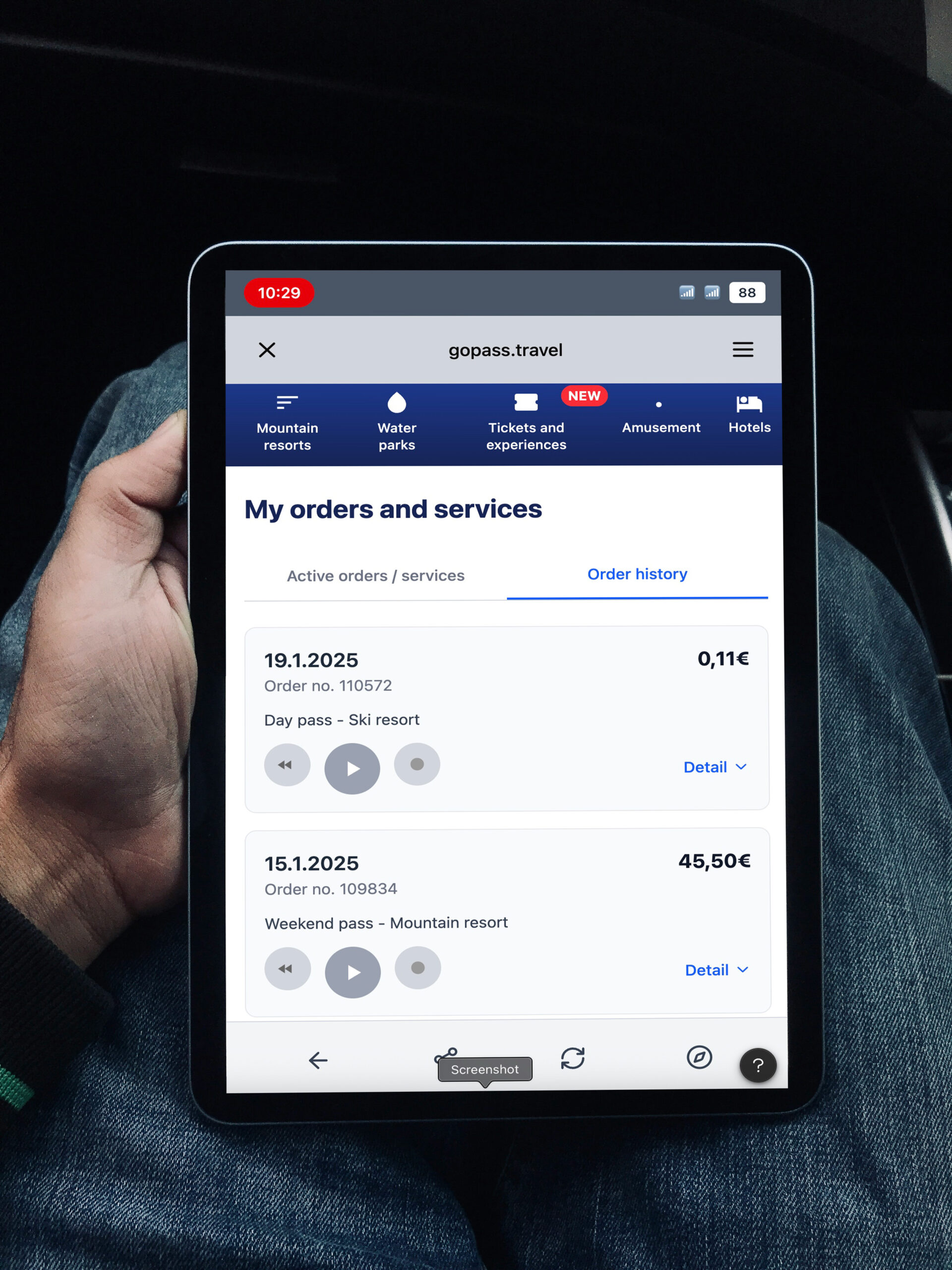
AFTER
The new design transparently addresses this issue head-on by providing the user with a clear, easy-to-find breakdown of all of their active plans and previous purchases. A good idea would be to also include a simple 'call to action' button that allows the user to make a repeat purchase or renew a plan.
Key Takeaway
Small improvements in navigation clarity, purchase transparency, and map readability could significantly improve trust and engagement with the GoPass app. By reducing friction in core skier tasks, the platform could strengthen its role as the primary digital companion for visitors to resorts such as Jasná and other destinations operated by Tatry Mountain Resorts.
This case highlights the importance of designing for real-world context, where users operate under time and environmental constraints.
In a production setting, aligning product, engineering, and business priorities around these constraints would be critical to delivering measurable impact.
© StructuredFlow 2026. All Rights Reserved.


