
Reducing Repeated Support Tickets in a High-Security Industrial Measurement System
Problem
Operators relied heavily on support due to unclear workflows, creating repeated tickets and operational inefficiency.
Descision
Led the design of a structured guidance system and introduced an AI-powered knowledge base to reduce dependency on support and enable self-service.
Outcome
Reduced repeated support tickets by 15% and established a scalable support model adopted across the organisation.
This case study has been intentionally anonymised to comply with confidentiality and NDA agreements.
Any resemblance to specific companies, people, or products is coincidental.
Context & Challenge
This project took place in a highly regulated industrial environment with limited UX maturity and significant operational risk.
Decisions affecting the product UI or hardware could directly influence customer operations, meaning poorly prioritised UX work could increase support demand and damage trust in the system.
Risk
Following the original brief would likely have increased system complexity, raised support demand, and undermined user adoption, ultimately damaging both product outcomes and confidence in UX.
UX Decision
I reframed the initial request from simply reviewing support tickets to diagnosing where usability issues were actually emerging, using research methods adapted to a constrained, high-security environment.
Operational Impact
- 15% ↓support tickets rate reduction in an offline, high-security system.
- Secured long-term funding to run the initiative on other projects across the organisation.
Key Operational Impacts: At a glance
Reduced repeated support tickets
for top recurring issues (~15% reduction).
Empowered
service staff
through structured feedback contribution.
Improved customer experience
with faster issue resolution.
Organisational
alignment
connecting service, UX, and product.
Diagnosing the Operational Problem
Support Ticket Analysis
To establish a baseline, I analysed three months of support tickets to identify recurring operational issues.
Usability Issues Detected
35 recurring tickets were identified, of which 20 indicated clear usability failures rather than technical faults.
My Role
As UX Lead, I defined and led the research and delivery strategy, aligning service teams, product managers, and key stakeholders around a feedback-driven approach to identifying and resolving recurring usability issues.
Head of Service
Service Personnel
Selected Key Customers
Product Management (including the Business Unit and Product Owners)

Our Approach

Given the constraints of a high-security, offline environment, traditional research approaches were not possible. The project, therefore, required several strategic decisions to ensure insights remained reliable.
Strategic decisions
Given the constraints of a high-security, offline environment, the core challenge was not collecting more data, but making the right decisions with limited access. The following decisions shaped the outcome:
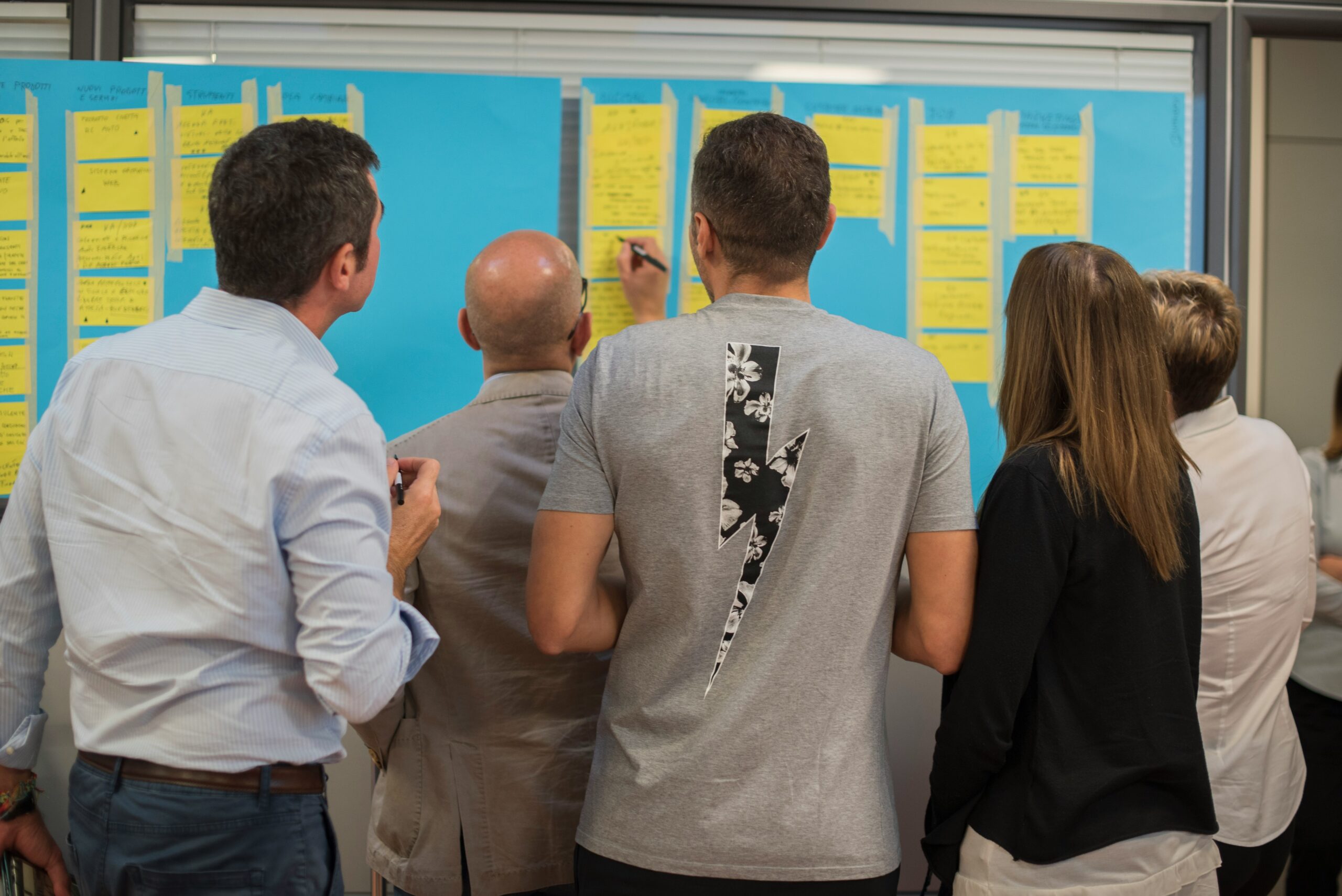
Used service staff as proxy users
Because direct user access was not possible, frontline service personnel were treated as proxy users due to their repeated exposure to real customer problems in the field.
Prioritised issues by frequency & support impact
Qualitative feedback was validated against three months of incoming support ticket data. Only issues that were both recurring and operationally costly were prioritised.
Focused on a Quick-Start User Guide instead of fixing the full manual
Redesigning the full 600+ page manual would not address the immediate usability and onboarding failures. Instead, I prioritised a targeted Quick-Start User Guide designed to reduce cognitive load and support dependency quickly.
From insight to outcome
The prioritised insights were translated into a concise Quick-Start User Guide designed to address the most common operational tasks and failure points.
- Step-by-step task flows
- Clear visual hierarchy
- Flowcharts for complex setup and troubleshooting decisions
Iterations with Service and Product ensured technical accuracy and practical usability before the wider rollout.
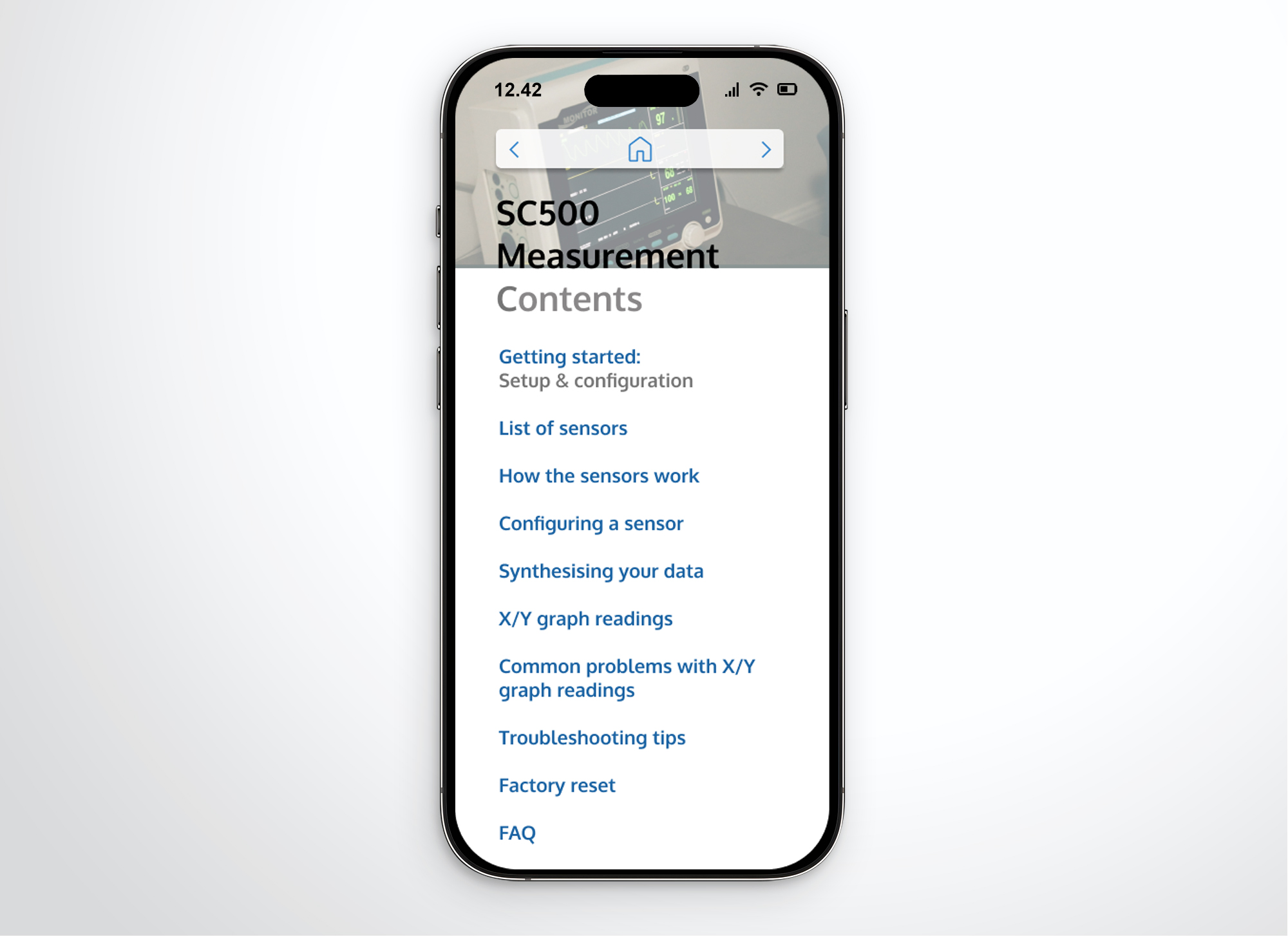
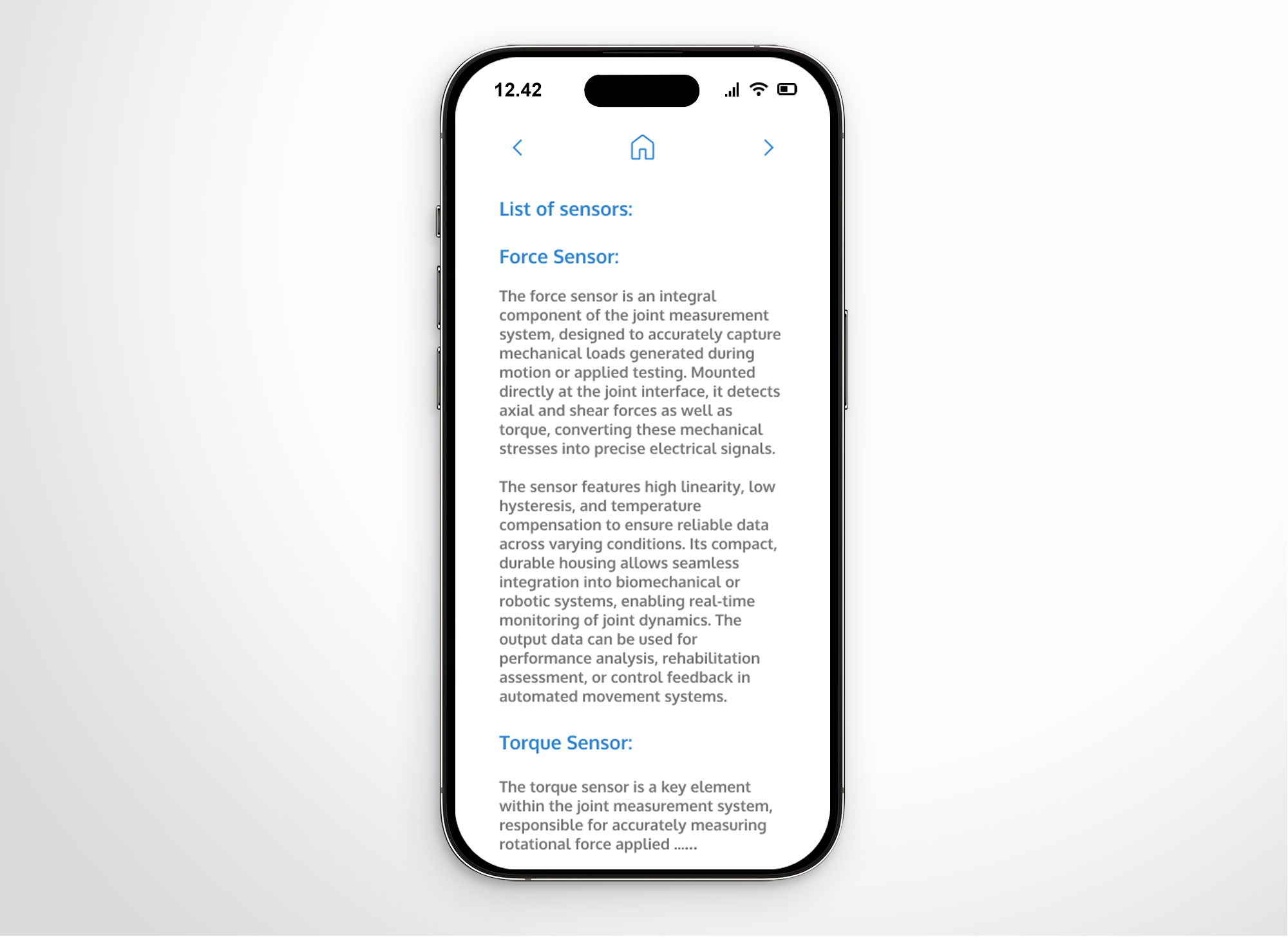
The industrial quick start guide was optimised for mobile devices, allowing technicians to easily access essential setup information in conjunction with the full online manual directly from their smartphones or tablets. This ensured quick reference and troubleshooting support while working on-site.
What was learned from this process
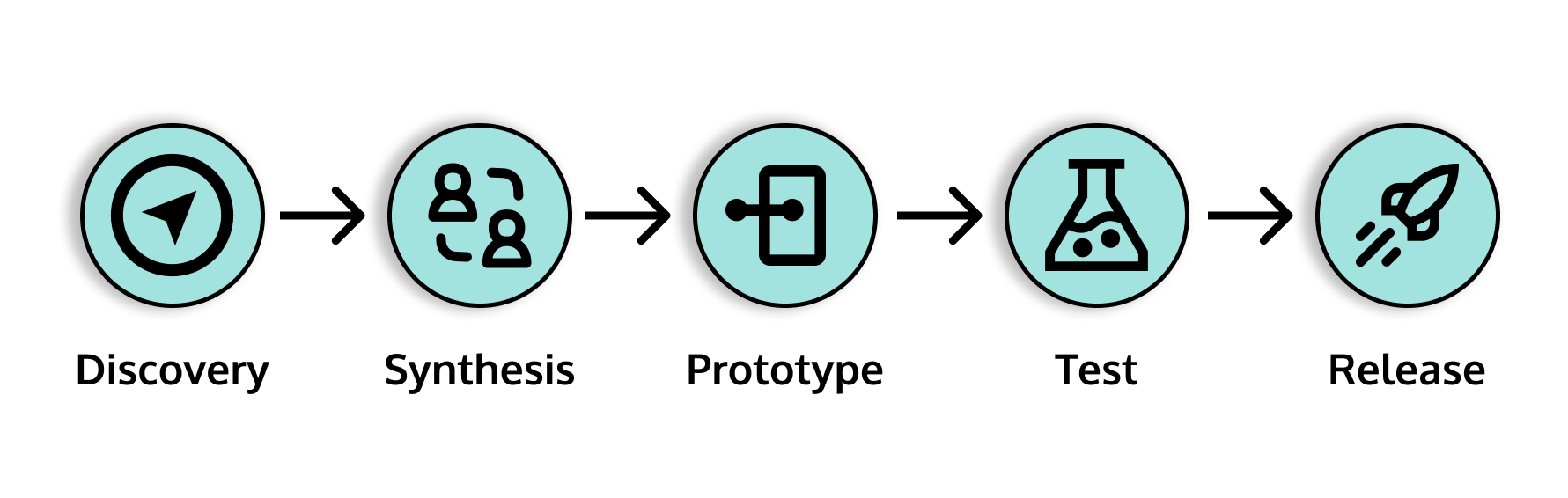
Because the guide was structured around real support patterns, it also created a valuable foundation for future automation by utilising AI technologies.
Scaling the full user manual with AI
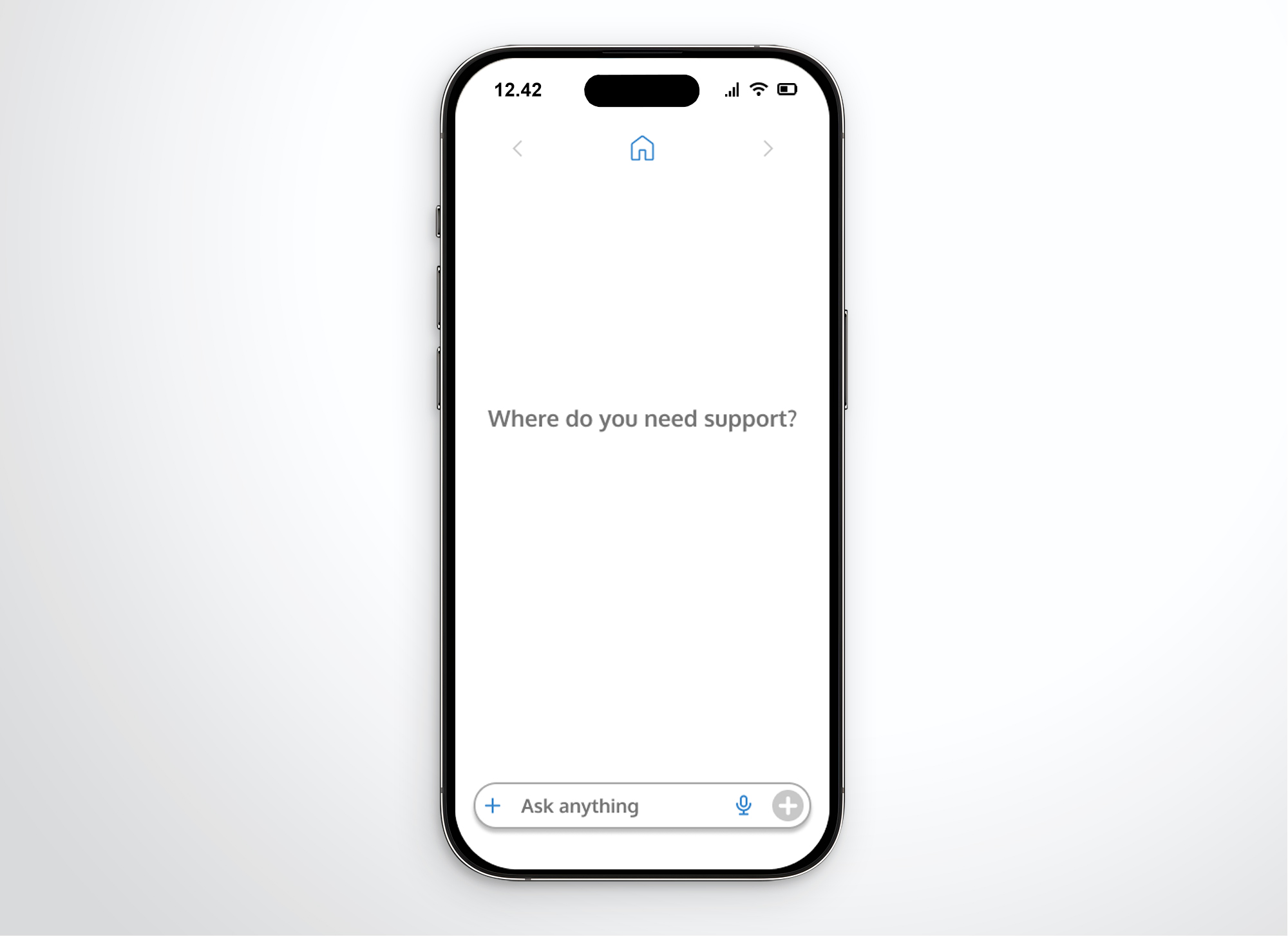
Because the original manual, combined with the Quick-Start User Guide, contains structured, repeatable, and grounded real support data, it created a foundation for future automation.
Building on this work, UX is now exploring an AI-powered support bot in collaboration with the AI & Digitalisation team. The goal is not novelty, but scale.
The initiative focuses on:
- Using data from both the full user manual and the Quick-Start User Guide
- Structuring customer support interactions for reuse
- Analysing recurring questions and failure issues from all touch points
- Providing faster, more consistent guidance
- Generating insights for product improvement and potential monetisation
Rather than replacing human support, the AI initiative extends the same feedback-driven approach to reduce support load while improving the customer experience.
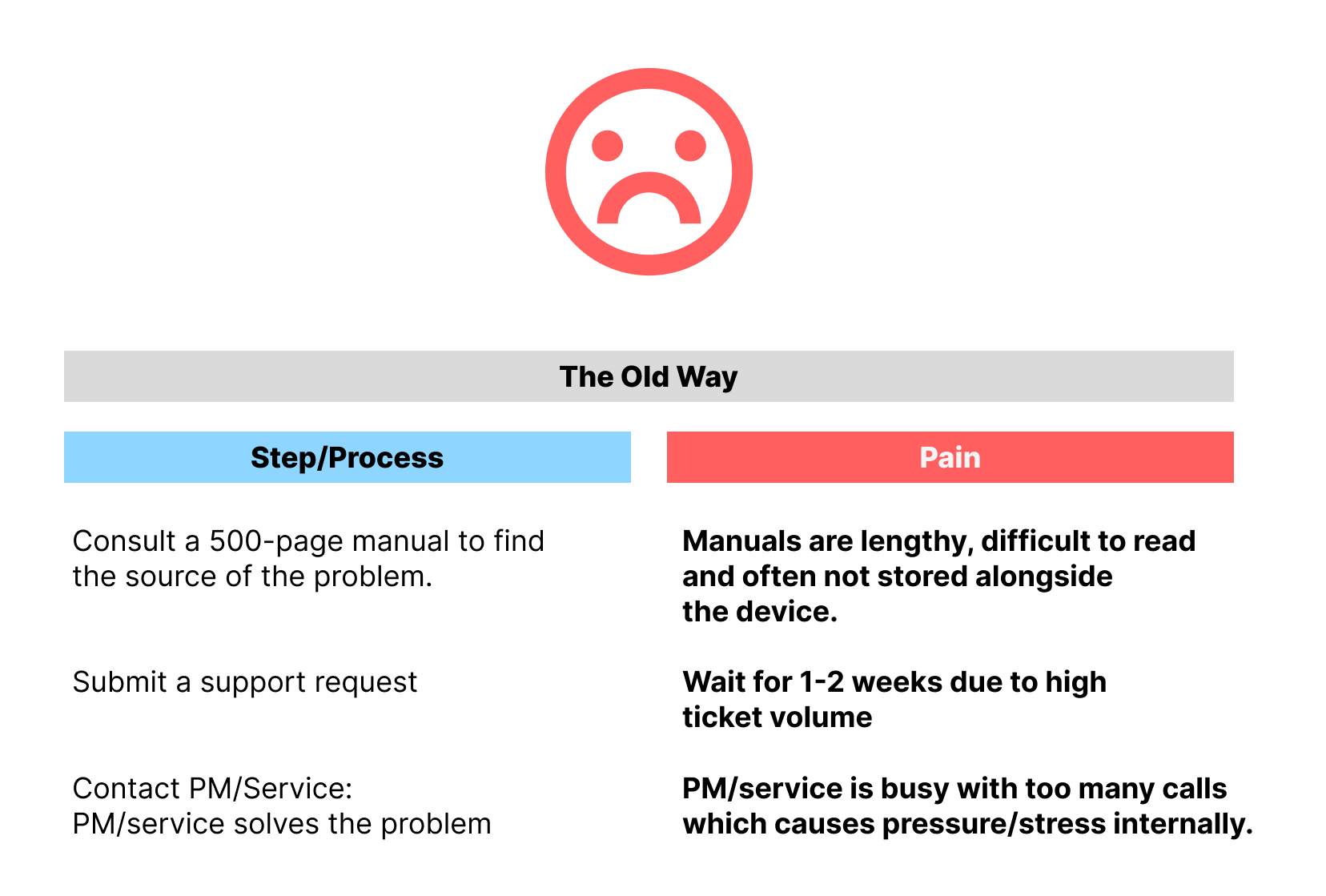
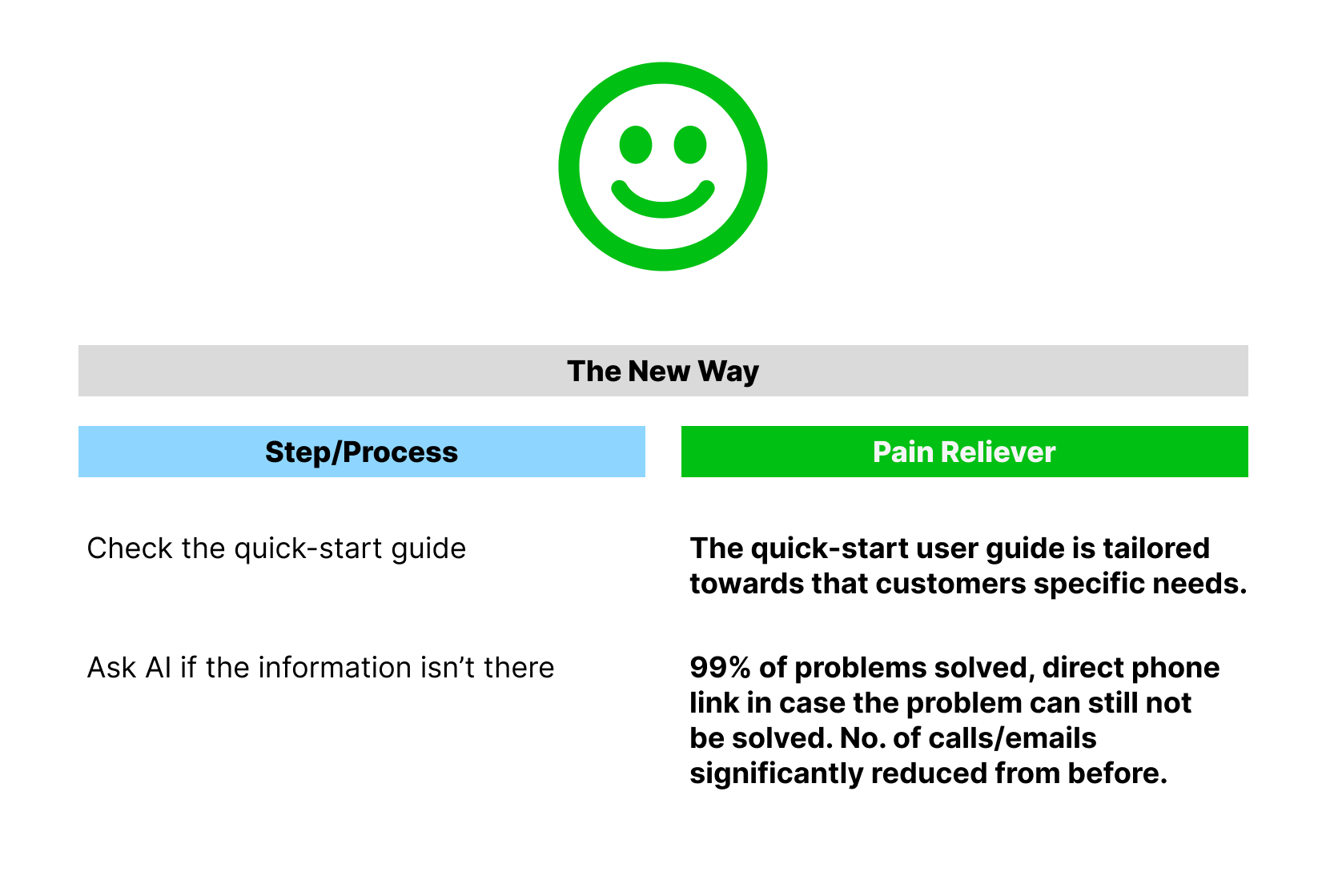
Before/After comparison with the new approach
In Summary
This project demonstrates how UX can deliver measurable impact even in highly constrained environments where analytics and direct user research are limited.
By establishing a service-mediated feedback system and aligning UX work with operational priorities, the initiative reduced support demand, improved usability, and secured organisational support for expanding the approach to other products.
The initiative delivered measurable impact by reducing support workload, improving usability, and aligning UX outcomes with business objectives.
Looking ahead, in conjunction with the Quick-Start User Guide, an AI-powered support bot is planned to automate guidance further, analyse frequent questions, and provide insights for product improvement and potential monetisation.
This case required extensive strategic UX leadership, combining creative research methods, cross-functional collaboration, iterative design, and outcome-focused thinking under real-world constraints.
© StructuredFlow 2026. All Rights Reserved.