
Increasing Student Engagement in a Legacy University LMS
Problem
Low student engagement and poor feature adoption in a legacy university LMS.
Approach
Led a 3-month research initiative with students and lecturers to identify systemic usability barriers and prioritise improvements.
Solution
Redesigned feedback workflows, assignment transparency, and feature discoverability.
Impact
Student engagement increased 40%, leading to continued investment in the university’s digital learning environment.
Context
During the COVID-19 shift to remote learning, the university’s legacy Learning Management System became the primary infrastructure for teaching and student interaction.
However, engagement with key learning features remained low, and both students and lecturers struggled with the system’s complexity and lack of transparency around feedback and assignments.
Key considerations were:
- High frustration among students and lecturers due to unclear workflows and difficult access to feedback.
- Strong pressure from university leadership to improve engagement and justify continued investment in digital learning infrastructure.
Strategic Approach
Given the scale of the issues and organisational pressure to improve the LMS, I proposed a three-month research phase to identify the most critical barriers to engagement.
This allowed us to prioritise improvements most likely to increase student participation while supporting lecturer workflows.
Key Risk
The LMS contained numerous feature requests and usability issues.
Attempting to address too many at once risked increasing system complexity and overwhelming lecturers during remote teaching.
The priority was therefore to focus on improvements most likely to increase engagement without increasing lecturer workload.
Impact
The improvements resulted in:
- 40% increase in student engagement with the LMS
- Increased lecturer adoption of key platform features
- Greater transparency in assignment feedback and grading
- Improved alignment between academic staff and digital learning teams
Diagnosing the Engagement Problem:
Initial research focused on understanding why students were disengaging from the platform.
Key questions included:
- Why were students disengaging from the platform?
- What barriers prevented interaction with LMS features?
- Which capabilities were underused and why?
My Role:
I led the end-to-end UX strategy for the initiative, including research, design, stakeholder alignment, prioritisation, and delivery. I worked closely with academic leadership, lecturers, and students to translate research insights into prioritised improvements.
Key Research Insights
Research revealed that the engagement problem was not caused by a lack of content but by barriers in feedback visibility, workflow clarity, and feature discoverability.
Feedback visibility
Students struggled to access and interpret lecturer feedback and grade weightings, limiting post-assignment dialogue.
Feature discoverability
Many LMS capabilities were valuable but difficult to find without onboarding or contextual guidance.
Workflow complexity
Assignment creation and management spanned multiple dashboard areas, increasing cognitive load for both students and lecturers.
Remote learning pressure
During the COVID-era remote learning, students placed higher value on transparency, timely feedback, and visible progress indicators.
Strategic Trade-offs
Although stakeholder buy-in and funding were strong, the project faced a different challenge: More valid feature requests than could realistically be delivered within the timeframe.
Key tensions
How we made decisions
Solution Prototype
The prototype below demonstrates how the redesigned feedback workflow improves transparency around assignment grading and lecturer feedback.
The Crucial Changes
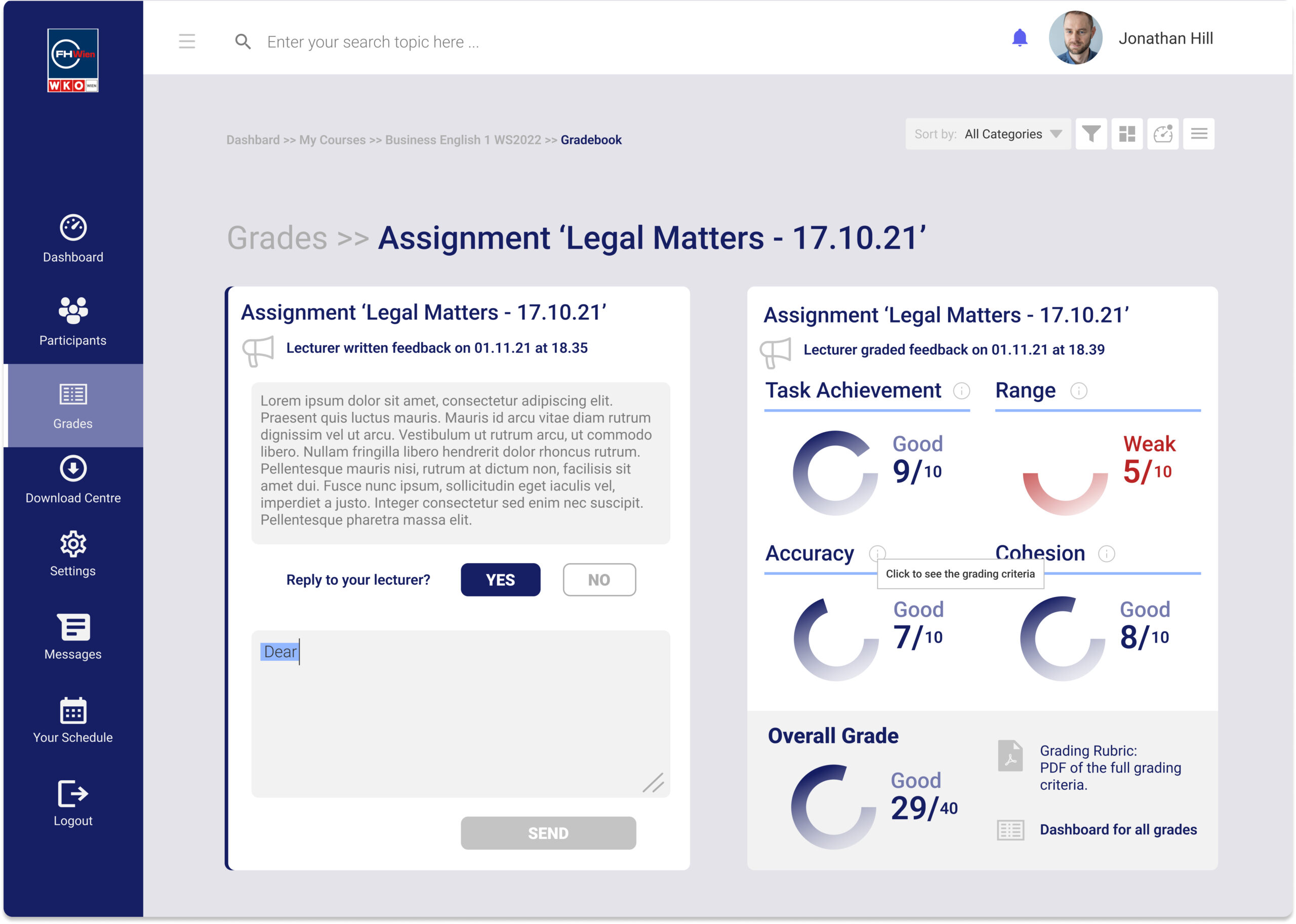
Improving Feedback Transparency
A redesigned feedback interface allowed students to clearly understand grade weighting and lecturer comments, encouraging post-assignment dialogue.
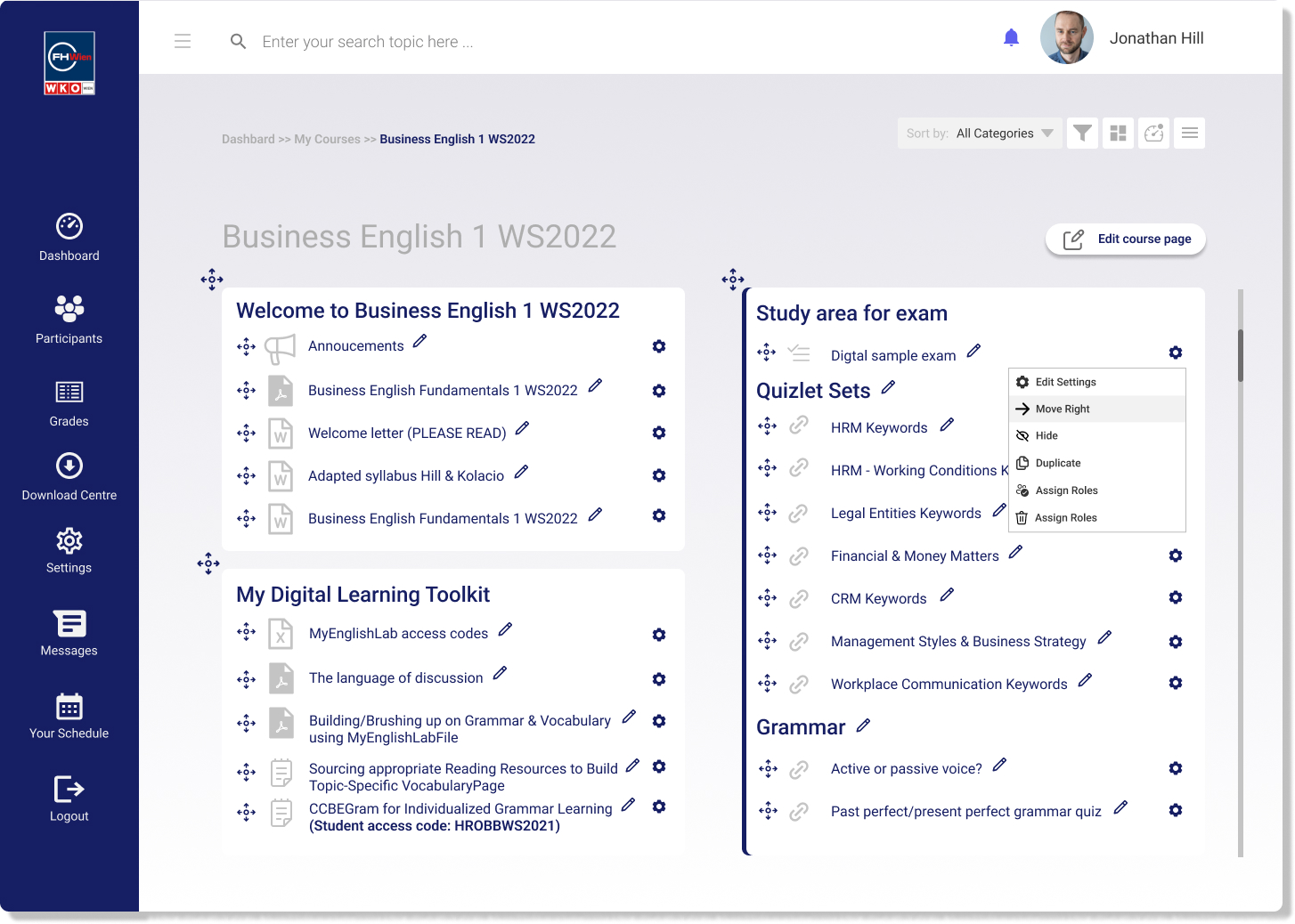
Fully customisable dashboard
A customisable dashboard allowed students and lecturers to prioritise key academic information. Research also highlighted the need for improved search functionality to support deeper navigation.
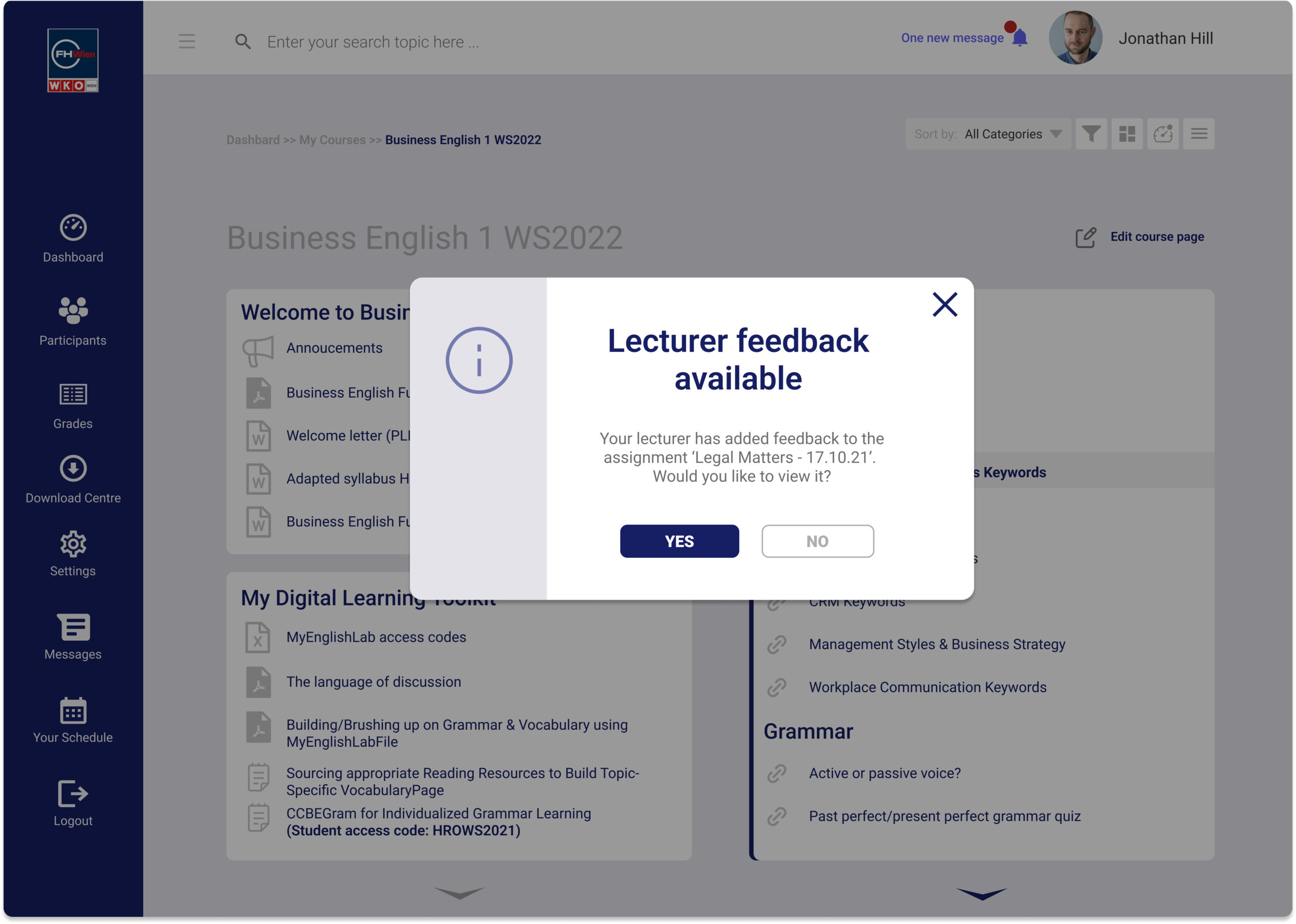
Just-in-time announcements
Contextual announcements were introduced to notify students of assignment deadlines, feedback updates, and important course events.
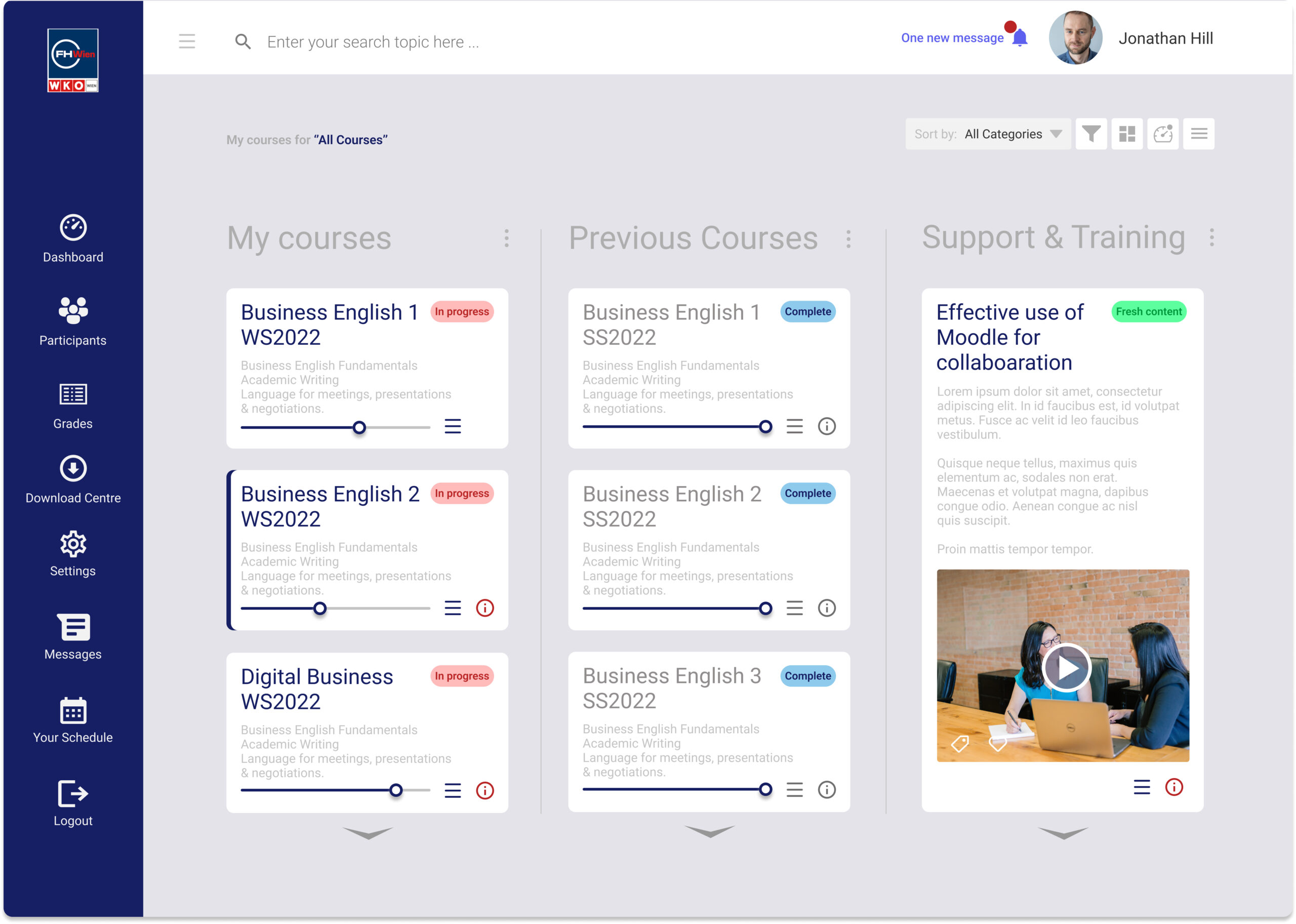
Lightweight training for lecturers
Short-form video “shorts” were introduced to help lecturers quickly discover and adopt LMS features without requiring formal training sessions.
Stakeholder Feedback

Jonathan is a passionate UX researcher and designer. As a former language teacher, he has a deep understanding of the user needs in higher education and recognises the pain points of popular learning platforms. He is therefore able to identify sustainable development potential for the digital learning environment within the framework of existing possibilities.
Tobias Schwarzbauer
FH WIEN DIGITAL LEARNING TEAM

Working with Jonathan was a pleasure due to his in-depth knowledge of UX processes and finding clever ways to uncover facts we probably wouldn’t have been able to manage. His work has greatly allowed us to achieve better engagement and make the life of the FH Wien Digital Learning Team much easier overall.
Wolfgang Rutte
FH WIEN DIGITAL LEARNING TEAM
Strategic Outcome
The project transformed the LMS from a largely transactional system into a platform that better supported ongoing learning dialogue between students and lecturers.
By improving feedback transparency, workflow clarity, and feature discoverability, the platform achieved a 40% increase in student engagement and secured continued investment in the university’s digital learning environment in 2022 and beyond.
© StructuredFlow 2026. All Rights Reserved.